Yoga Sūtra 3.6
tasya bhūmiṣu viniyogaḥ
तस्य भूमिषु विनियोगः
What is Viniyoga
The Principle of Appropriate Application
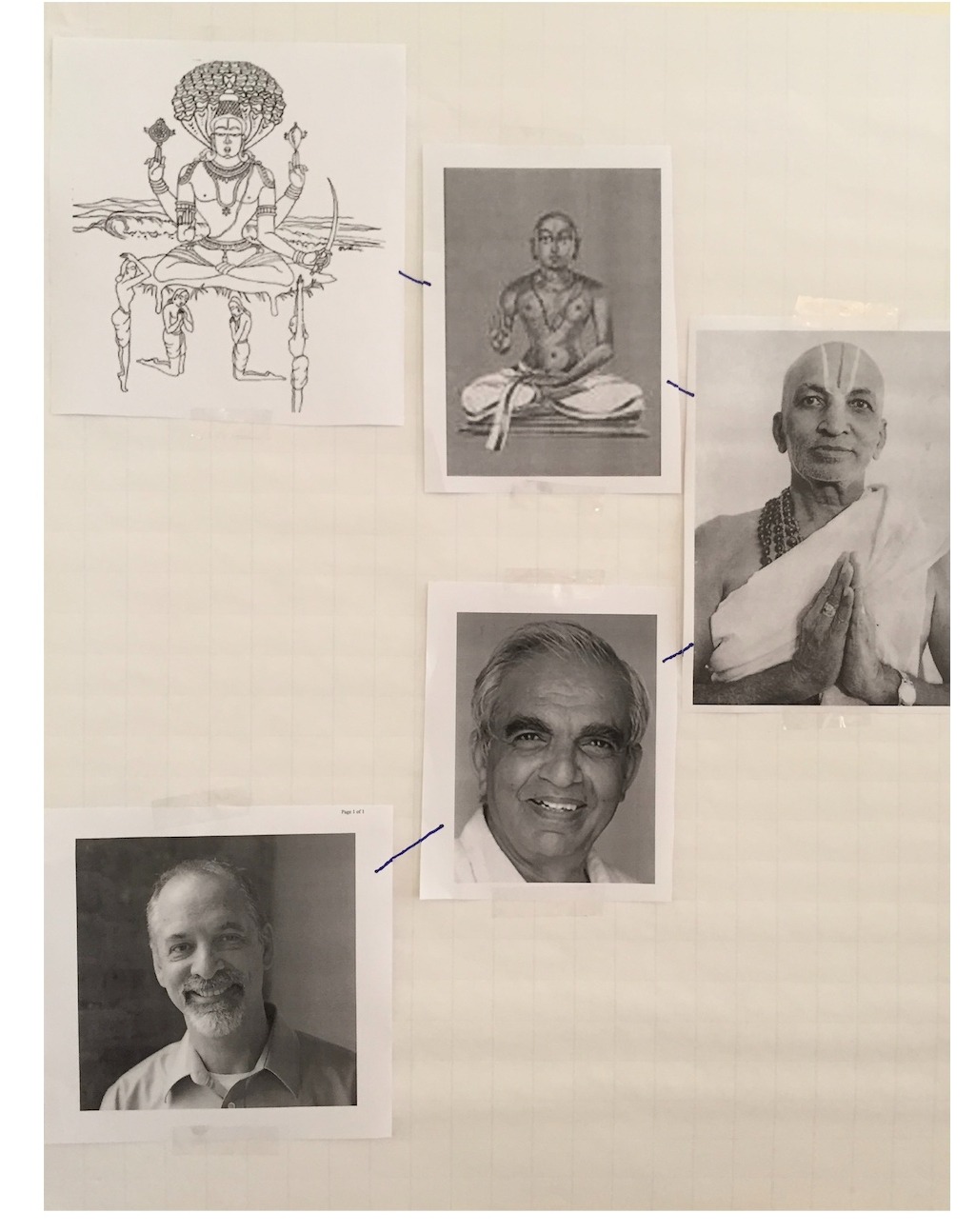
Viniyoga is a traditional, therapeutic practice that prioritizes the individual over the posture. Developed by the legendary yoga master T. Krishnamacharya through an authentic lineage transmission — tracing back to Nathamuni and Patanjali — and formalized by his son T.K.V. Desikachar, it favors a customized approach tailored to your unique health, goals, and stage of life.
Here, asana is not the final destination, but a tool for self-discovery and healing. By holistically integrating postures with pranayama (breathwork), chanting, and meditation, Viniyoga remains a deeply personal, evolving practice rather than a repetitive exercise routine.
The Lineage
Lineage of Viniyoga Teachings
Core Principles
Four pillars of the practice.
- 01
Breath-Centric Movement
Every movement is born from, guided by, and sustained by the breath.
- 02
Function Over Form
Postures are adapted to meet the needs of your body — not the other way around — to unwind dysfunctional patterns and restore structural balance.
- 03
Repetition and Stay
Dynamic repetition builds new functional movement patterns and safely prepares the muscles for a longer stay — to stretch fascia, influence physiological functioning, and increase circulation to the organs.
- 04
Intelligent Sequencing
Practices are systematically structured to protect the body, always returning the spine to neutral to allow the nervous system to integrate the work.
Ultimately, Viniyoga — or yoga in general — is not separate from your life; it is a practice to sustain your life, empowering you to live with greater awareness and presence.